31 October 2006

Taking Humorous Photos

Chris' comments on my previous post prompted me to write this one. In that post, Chris had accused me, albeit only jokingly, that I must have photoshopped that sprained ankle photo to falsely show a swollen foot. His insinuation, although he might not have meant it, was that I must have done so to justify my medical leave from work. How suspecting of Chris! I would like to state in no uncertain terms that I would never stoop so low, even when limping from a sprained ankle.

I like to take humorous photos. (However, that is not to say that my swollen left foot was a funny photo.) To capture a funny photo, you need to be quite observant and have an eye (actually both eyes) for detail. Take for example this photo I took of an unusual car:


Before Chris starts getting suspicious again, let me state categorically that save for my personal watermark, the photos in this post are all 100% original. They were all taken by me and not "ripped off from the Internet" as Chris likes to put it. Can you guess how this "hybrid" car photo came to be?

I also like to take photos of funny signboards:


This signboard was sighted at the hospital where I went for the treatment of my ankle. Obviously someone, likely a smoker, wasn't too happy with the restriction.


This cafe seems to pride itself in its slow service. It might as well add "Only for the patronage of the very patient who will not fall asleep while waiting for his 'wake-me-up' coffee".


Does this hawker know that he may be driving away "newly health concious" customers like Chris?

To be fair, I also came across signboards that were quite creative in the choice of words. One prawn mee stall at Dunman Food Centre was named "Old King Koh's Prawn Mee". People of my generation will recognise that as a play of words of the nursery rhyme "Ole King Cole". The stall owner was probably a Mr Koh. Sadly, his creativity and humour seemed to have outlasted his business - the stall had stopped operating since several months ago.

Then there was this pub in Joo Chiat Place called "Old Man's Pub". Great! Finally a pub to cater specially for my generation, I thought. I was curious to know if the drinks were served by old bargirls to match the clientele. However, I did not get to find out because the pub closed down before I could patronise it. Maybe that's because they really had old bargirls, heh.

24 October 2006

I Remember Rediffusion


When I was a kid in the 60s, mass media consisted only of newspapers, radio, Rediffusion and TV (which was just introduced then). Of course, the Internet had not been invented yet - it only came about in the early 80s.

Radio only had 3 bands then - short wave, medium wave and long wave. Frequency modulation (FM) band was unheard of at that time. We switched on the radio if we wanted to hear international news and stock market reports. But if we wanted news and entertainment with a local flavour, we turned on our Rediffusion set.


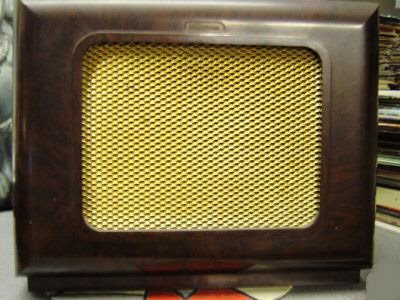
Rediffusion was a subscription 'cable radio' service. The signals came via physical wires connected to what was basically a speaker box with a volume control and a 2-station selector knob. The stations were called 'Golden Station' and 'Silver Station' - one was for dialect programmes while the other was for English programmes, although I can't remember which was for which. The monthly subscription fee then was an affordable $5 hence our family and most of our neighbours could afford the service. As the operation of the Rediffusion set did not require the use of any of the subscriber's electricity supply, most of us just left the set on at maximum volume throughout the day. I think that the broadcast for both stations started at 6 in the morning and ended at midnight everyday. Those of us who needed to wake up at 6 am would leave the set on so that it would act as an alarm clock.

Siting of the set was an important consideration. As connection was by physical wires, the set was not portable. Once you had decided on a location to place the set, it was as good as fixed. You could not bring it along into the kitchen or the bathroom with you even though it was playing your favorite song or story. Hence most people would place the set in a location where they could hear it no matter where they were in the house. This was not very difficult to do because most of us lived in tiny abodes. Most people placed their sets in their living rooms or halls so that visiting relatives and friends could have some entertainment when conversations ran out.

You also could not put on headphones/earphones to hear a programme in privacy simply because there was no such feature available on the set. Best of all, there was no remote control to fight over - whoever laid hand on the selector knob first got to choose which station to listen to, provided there was no overriding vote or veto from either mum or dad.

The Rediffusion man would come around once a month, carrying a soft brown briefcase. After collecting the $5 subscription fee from you, he would tear off a blue stamp-like receipt from a larger sheet and hand it over to you. The receipt had the subscription month and a serial number printed on it in red.

This little brown box we called Rediffusion provided many hours of endless entertainment for us. I remember Lee Dai Soh relating his interesting Cantonese stories at 2 pm every weekday afternoon and then again at around 6 pm in the evenings.


Ong Toh, the Hokkien storyteller would come on every night at around 9 pm. For the English station, I could not forget Casey Kasem's countdown of the American Top 40 every Saturday at around 2 pm.


With TV being introduced in the 60s, the attraction of Rediffusion entertainment diminished somewhat. With the Government's introduction of the Speak Mandarin campaign in 1979, dialect programmes on Rediffusion were cut down. Lee Dai Soh subsequently retired from Rediffusion. He passed on in 1989.

Rediffusion also had to reinvent itself since then. It is currently providing a wireless digital broadcast service. Visit it's website and you will find words like reborn, reinvent, rewound, redefined, revitalised, retro, rethink, remake, relevant, etc plastered all over its website.

Further Readings

Read more about Lee Dai Soh here and here (in Chinese).

Also read about fellow blogger carcar's memory of the 'small square brown color box' (as he called the Rediffusion speaker box) here.

23 October 2006

My "Achilles Heel" - An Update

I appreciate all who offered words of concern and encouragement when I sprained my ankle recently.

When I put up a blog photo of my swollen left foot, Chris smsed me and said accusingly "You photoshopped that photo, right? You think I dunno?" This Chris really thinks that I am so free ah? 真的是幸灾乐祸, 落井下石. Ironically at about the same time, he still dared to blog about being religious and compassionate some more. Although my ankle was hurting, he was making my toes laugh.

Dr Goh P L who attended to me on 18 Oct 06 at the CGH had referred me to the hospital's Sports Medicine Clinic (SMC) for an appointment on 20 Oct. When I smsed Chris about this, he responded that since there was no fracture detected, my ankle should heal in time. So Chris accused me again of gengging (Hokkien for malingering).

On 20 Oct, I kept to the appointment despite Chris' teasing. At the SMC, I saw Dr Benedict Tan, the renowned sailing sportsman. He was very friendly and said "Hello" to me first.


Dr Tan is a Consultant Sports Physician at CGH. He is renowned for his achievements in another "s" sport - the field of competitive sailing. He was also awarded a Medal of Commendation in the Singapore Youth Awards 2004. However, Dr Tan was not the doctor who attended to me. Instead, I was attended to by Dr Roger Tian H H who diagnosed that I had almost completely torn two of my ligaments in my left foot. If you must know the medical term for the ligaments, I think they are called the talo-fibula ligaments:


Although ligaments may heal themselves, healing normally takes about 6 weeks. Swelling on the other hand on my injured foot may persist for several months. I was advised to take more RICE. No, not our staple grain but "Rest, Ice, Compression, and Elevation". The healed ligaments would also be weaker, looser and more susceptible to further injury and pain. The situation was worse in my case because my injured ankle had one or two similar injuries previously and was thus already considerably weakened. He also pointed out from the x-ray images that the edges of some of the bones in my left ankle had some spurs or spikes. (The edges are smooth in a normal ankle.)

On further physical examination, Dr Tian found that my left ankle joint was unstable, meaning that it had become too loose from old injuries. Hence there was a good chance that I might injure it again in the same way in future. He recommended that I should go back to the clinic for regular physiotherapy sessions. The first session was scheduled on 30 Oct. He would see me again on 17 Nov to see how I responded to the treatment. He would then decide on further suitable treatment for me. He would not rule out surgery but if it was not so serious, he might just prescribe an ankle brace for me so that I could continue roller blading more safely:


Shucks, I should have bought a size 9 blade for my left foot and a size 8 for my right.

So Chris, once again you have wrongly accused me - this time of gengging. Out of genuine concern and not revenge, I would strongly advise you to seek medical opinion first before you take up roller-blading. I am not being a wet blanket here but do you remember that old hairline fracture in your right foot?

Read more about the treatment of ankle and foot injuries here.