06 November 2006

When We Walked On Water

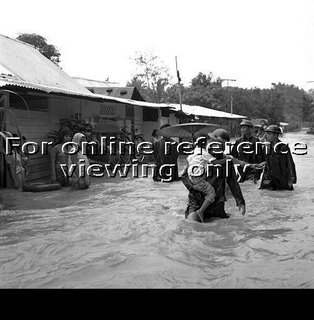
A flood in Telok Blangah - Photo Courtesy of the National Archives of Singapore


Before the mid-1960s, Singapore was very prone to floods. The situation was especially bad during the monsoon season when rain is heavy and prolonged. Since those early years, the Government has done a lot to improve the drainage system and reduce the flood-prone areas from 3178 hectares in the 1970s to only about 134 hectares now. Even so, our national water agency PUB still issues flood advisories - the last one was only as recent as in April this year.

People who stayed in kampongs at that time were particularly hard hit by the floods. You could be forgiven if you thought that Singapore was hit by a giant tsunami:


Flood waters that turned a kampong into a kelong


A living room that became a huge bathroom

A policeman rescuing a boy in a kampong near the Police Training School along Thomson Road


Even city folks were not spared the wrath of the floods. The following two photos dated 13 Nov 1964 show the flood situation in the Telok Blangah area. Ironically, Singapore had water rationing in the 7 months just prior to this flood:


It was fortunate that we lived on the fourth and topmost floor of an SIT (Singapore Improvement Trust) flat. Hence we were relatively unaffected by the floods. However, I remember a bad flood in 1965 when my sister Lilian was studying in Sec 1 in Whitley Secondary School. I interviewed her for this story:

My school was located at the junction of Whitley Road and Dunearn Road. (The building has since been torn down and replaced by Singapore Chinese Girls' School.) I was in the morning session. The rain probably started sometime in the morning not long after I had arrived in school on a Green Bus.

By the time we were dismissed at around 1 pm, the flood waters around the school had risen to more than 1 metre deep. As the roads around the school were not passable to vehicular traffic, all bus services were suspended. All pupils from the morning session were instructed to assemble in the canteen and wait for the flood to subside. It was a long wait - we were stranded in our own school.

The rain continued to pour and we were cold and hungry. None of us were prepared for this to happen. Most of us had brought only enough pocket money to buy food during recess. In any case, by the time the afternoon recess was over, most of the stalls had run out of food. To make matters worse, there was no public phone in the school. Even if there was, most families did not own a telephone then so there was no way to contact them. I could only hope that my parents were kept informed via media reports.

Nightfall came and still there was no sign of relief. The passage of time seemed excruciatingly slow in such circumstances. After what felt like ages, help finally came at 9 pm - in the form of an army 3-tonner. Somehow, the men-in-green could always be counted on for emergencies like this. I boarded the truck gratefully with scores of other school mates. That was my first and last time that I rode in a 3-tonner. Although the ride was not very comfortable, I can safely say that it was the best ride I ever had in my life. I had to alight at the Rex Cinema and walk another 15 minutes back to my home in Cheng Yan Place near Queen Street.

It is indeed a good thing that we now have Civil Defence exercises to prepare for such eventualities even though that Singapore is now less prone to such massive floods. Thanks goodness and the Government.

That was a story on how we used to walk on water, rather unwillingly. Therefore, I still cannot bring myself to understand how "walking on water" has now become such a privilege that it can be used to sell a condominium.

Acknowledgements:

Thanks to my sister for the above story and also to National Archives of Singapore which supplied all the photos used in this post.

05 November 2006

Singapu-lah


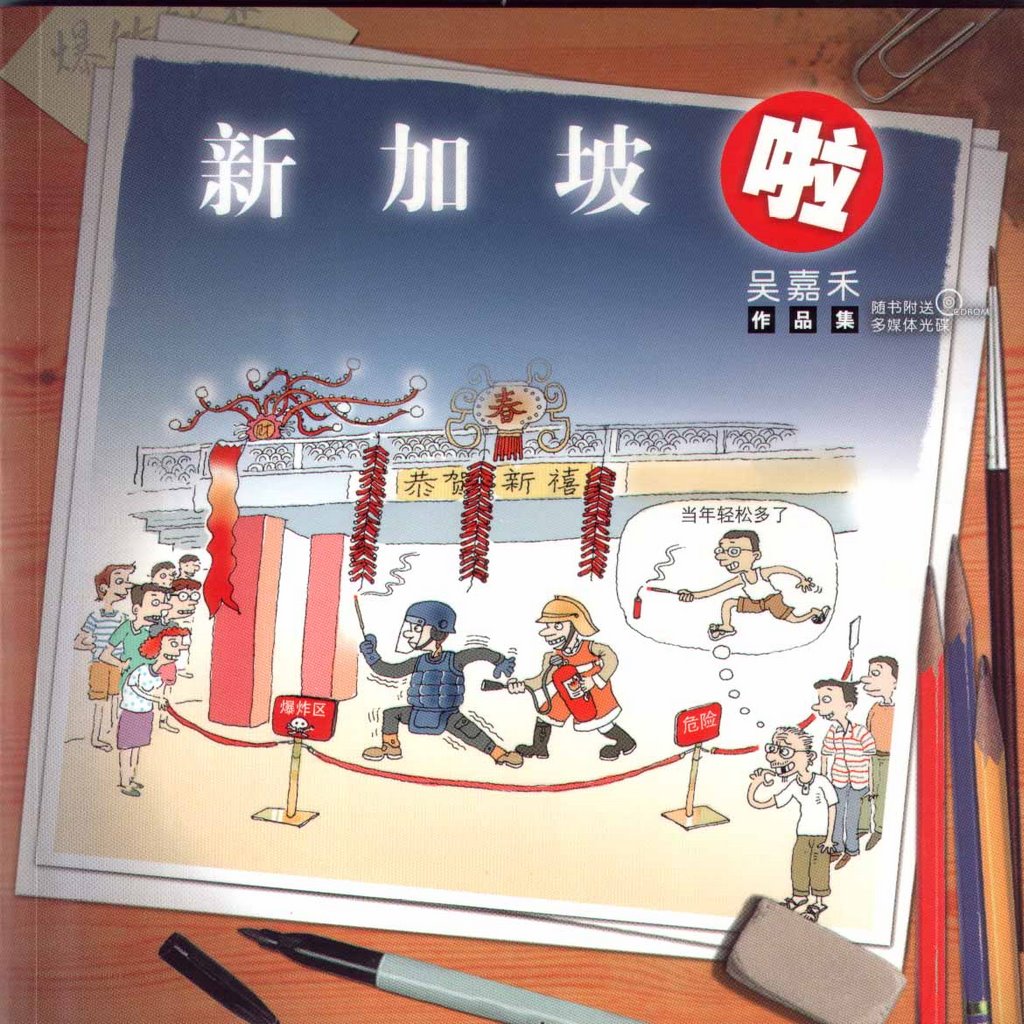
Today, on the recommendation of my wife, I bought a comic book published last week by Lian He Zao Bao in conjunction with the yearly Speak Mandarin Campaign. It is entitled 新加坡啦 (Singapu-lah). The title is a play of words linking our country's Malay name "Singapura" and Singaporeans' habit of using "lah" to end almost every spoken sentence. The book has a forword by Mr Wong Kan Seng, no less. Therefore its contents must have been officially sanctioned (including topics about sex) and it should be safe for me to blog about it.

The book comes with a CD-ROM containing 30 of the 118 articles. The book could improve your Chinese as well as your sense of humour. You will also appreciate the lighter side of local social issues. At only S$8.80, it is real value for money.

The book's satirical cartoonist is Mr Wu Jia He (吴嘉禾). His cartoons mostly poke fun about local social issues. Here is one example that I found very funny and is an issue close to my heart too. In fact, I had earlier blogged about a similar topic:


My amateurish translation of the Chinese in the above cartoon is as follows:

Wife seated at the table tells elderly husband: "You must be careful. Don't let your Central Provident Fund (公积金) become 'a fund for prostitutes' (供妓金)."

The beauty of this cartoon is in the pun of the two Chinese phrases. They sound very similar to each other but have very different meanings. Yet, they reflect the true situation that's facing many local elderly men who have collected their CPF.

Here's a rough translation of the short article below the cartoon:

The redlight district around Geylang has always been an area where prostitutes solicit for business. However, these foreign women have recently infiltrated into the HDB heartlands. The women's main targets are the elderly retired men who have just withdrew their CPF savings. The women would first approach the old men to strike up a conversation. Next, they would try to negotiate a sexual transaction.

There are some men who, despite of their advanced age, could not resist the temptation to dally with women. After having their fun, they are even foolish enough to handover their CPF savings to these prostitutes. Ultimately, they ended up without the women and without their money.
Hmm... maybe my wife is hinting to me to be careful about my CPF too. After all, I'll be collecting mine in a little over 4 years' time.

03 November 2006

An Article in Zao Bao About "Grandfathers Telling Stories"

On 31 Oct 2006, an article about "grandfathers telling stories" was published in the "zbNOW" section of Zao Bao (早报):


打开博客/网站的狮城旧相簿 阿公讲古也e了

● 林方伟

龙国雄 李白娟(摄影)

  本地互联网有越来越多“话当年”的博客与网站,这些博客纪录黑白时代的狮城旧事。

  国家文物局也开始用“娱乐的手法”及“年轻人的语言”,让e世代亲近新加坡的文物,其博客网站已超过20万浏览人次。

  谁说博客只是青春世代的专利?

  54岁顾问公司的老板,林镇思每天勤于看blog,每星期至少写一两篇文章挂上他的个人博客http://goodmorningyesterday.blogspot.com。人气博客作家Mr.Miyagi甚至说过,林镇思或许是新加坡最年长的博客作家。跟漫不经心,什么都写的博客一族最不同的是:他的博客是新加坡第一个专门纪录黑白时代,狮城旧事的图文相本。

咖啡店聊天的延续

  一“打开”林镇思的博客,耳边就仿佛传来保罗安卡(Paul Anka)的《早安,昨日》,让大家掉入浓浓的旧日情怀里。

  林镇思说:“我同代的人不喜欢写作,但我却很喜欢写东西,你可以说这是我的‘咖啡店聊天想当年’的网上延续吧。我写博客是因为年轻人对新加坡的过去一无所知。我带孩子去马来西亚,他们看到牛羊鸡时,兴奋得不得了。我说,你可知道新加坡曾经也是这样的甘榜?现在的小孩只有在鸡饭摊上看到鸡。”

  所以,“阿公讲古”也得e化了。

  他笑说:“李总理在国庆群众大会呼吁老年人要多跟年轻人分享经验。要是我跟年轻人话当年,他们肯定会嫌我闷。可是现在年轻人会上我的博客看,留言,是因为博客就是他们的语言。我找到了跟他们沟通的语言。”

  “新加坡的变化真的太快了,一个地方你没去一两年,下次再去它已完全变了样!新加坡每变一次我们就失去一些东西。我觉得旧国家图书馆是新加坡历史文化的遗产,政府把它拆掉,下手是重了些。他们现在似乎也意识到,正努力地做些弥补。但我觉得还不够,所以自己保留我们的历史文化遗产,把这些记忆留在互联网上。”

用娱乐的手法写历史

  近年本地互联网的天空也有越来越多“话当年”的内容及单元的博客。

  50岁公务员,古洪镖的博客(http://victorkoo.blogspot.com/)便是其中一个热衷“话当年”的写手。他与林镇思也因为写博客交了朋友。

  跟“一往情深”的林镇思不同的是,只要感兴趣的题材他都写,只是怀旧的东西是他最常写的题材。他最新挂上的文章就是纪录在电视机出现之前,全民听“丽的呼声”广播的往事。

  宜中宜西的古洪镖记得,每周日下午2点,及晚上6点是李大傻讲古的黄金时段;星期六下午2点则是美国DJ Casey Kasem美国40大流行曲排行榜的转播,这是当年赶流行的男女必听的节目。

  古洪镖告诉记者,有空的话,他接着会写60年代的电视文化:“60年代末期,电视刚登陆新加坡一两年后,我家里就买了电视机,当时这算是很罕见的。当时我们住在信托局组屋里,邻居的小孩会不请自来,坐在我们家里看电视,直到最后一个节目播完。这是当年的组屋文化,跟现在家家门户深锁完全不同。”

  他还在博客写过旧国家图书馆、旧国家剧场、结霜桥(Sungei Road)的旧货市场(他说,这是林镇思交给他的功课),还有旧日办公室里的工具。他说:“我要用娱乐的手法把这些‘历史’传下去。”

  虽然是“话当年”,但古洪镖说,既然要在网上流传就是对历史记载的一个贡献,就不能容许有错误的数据,以讹传讹:“我在写丽的呼声时,说李大傻的方言讲古节目在1982年的讲华语运动展开后开始没落。后来发现,把讲华语运动的时间搞错了,应该是1979年,便赶快改过。”


让e世代亲近新加坡文物

  与古洪镖一样,国家文物局也开始用“娱乐的手法”及“年轻人的语言”,让e世代亲近新加坡的文物。从已超过20万浏览人次的数据,可见反应不错。  

  国家文物局公共关系及文物促进处处长林汉龙说,博客给了人民一个有力的工具,让他们也能制造及提供内容。

  开放一年多,yesterday.sg 的内容完全由民众提供。除了有老人家来话当年,还吸引许多20多岁的e生代上来分享故事、留言等。

  目前yesterday.sg 共有15名志愿的编辑,来自各行各业,有网页设计者、社工、前讲师、自然爱好者等,从20多岁的后辈到60多岁的阿公都有。

  这博客网软化人们对文物“硬邦邦”的成见,让文物更体贴、可亲。博客的内容很自由,可以沉重如一座即将拆毁的历史古迹的最后风采,也可以只讲牛车水一个蛋哒的由来。

  参与创造这博客网的林汉龙说:“我们正计划增设播客Podcast的功能,年轻人可以把阿公的话录制下来挂上网。如果题材、效果好的话,我们甚至可以请他们正式做个口述历史存档。博客的重点是:人们须随心所欲,想要做才去做,有感觉,有情怀的东西才会源远流长。”

  他说:“文物不只是国家的,它也是个人的。我都有旧日的宝贝,不管是一本书、一张照片、一只手表,甚至是一段回忆,他们都是我们的传家宝。”

  这一群怀旧的博客作者的确在网上交织出一个历史文化遗产的网络。近年民俗博物馆在新加坡不断被讨论,你可以说,这些博客就是网上的民俗博物馆,他们的记忆展出经时间洗礼的文物,献给下一代的情感遗产。

一起来发掘新加坡!

  从11月1日起至明年1月31日,国家文物局将联同国家图书馆管理局及媒体发展管理局,举办一个全方位、多媒体的大型活动,鼓励新加坡人通过新媒体、电视,走入博物馆、历史古迹及图书馆等管道,“发掘”新加坡的“宝藏”,“继承”我们的历史及文化遗产。
  为期3个月的40多个活动,包括:林益民主持的节目"Explore Singapore!"(12月14日,5频道7点半启播)及约27个独特的博物馆活动。

  文物不只储藏在博物馆内,现在国家图书馆也开放SMS查询参考服务,公众对新加坡有任何问题,就可在办公时间内通过SMS简讯传到91787792,图书资料专家会在一天内回复,推荐书籍或相关网页来解答疑问。

  此外,他们也将在11月11日及12日请来古董专家为读者鉴定家里保存文物的价值。(http://dl.nlb.gov.sg/victoria/)

  国家文物局总裁许顺华说:“我们希望这活动能吸引84万博物馆参观者、46万图书馆使用者及12万的电视观众群。”

  共计有142万个新加坡人将加入“寻宝”行列,发掘新加坡鲜为人知的许多知识宝藏哟!

  节目详情请浏览http://www.yesterday.sg/explore/main.html

新加坡时光隧道的博客/网站

  ◆http://yesterday.sg/

  国家文物局所设,恋恋狮城往日回忆的博客网站。没有自己的博客的人,只要报名加入便可投稿给他们,编织新加坡丰富的陈年往事。

  ◆http://goodmorningyesterday.blogspot.com/

  ◆http://victorkoo.blogspot.com/

  ◆http://bullockcartwater.blogspot.com/

  一个有关牛车水的博客。

  ◆http://blockshisan.blogspot.com/

  和“Goodmorningyesterday”一样,这今年5月设立的博客专缅怀新加坡黑白时光。“第13座”原来是取自他当年居住Jalan Merpati的地址。

  ◆http://groups.yahoo.com/group/singaporeheritage/links

  由一名新加坡历史学者蔡爱琳(Chua Ai Lin)设立的网上社群,网集许多纪录、展出新加坡文物的地点的专属网址。

  ◆http://singaporelifetimes.blogspot.com/

  菜单左边有一些缅怀旧日新加坡的网站联线。

“英军小红毛”的新加坡记忆

  ◆http://www.singas.co.uk/

  五六十年代英殖民地时期,跟随英籍公务员及军事人员父母住在新加坡的英国人,他们戏谑自称为Britbrats,设立了“回忆新加坡”(Memories of Singapore)网站,网集超过1000多张“明信片”般的照片,提供红毛看古早新加坡,缅怀童年的另一番观点,包括当年的诗家董!

  ◆http://www.alexandragrammar.org

  网集从1945年起,新加坡皇家英军、空军及海军营内学校的老校友的回忆。里头有不少珍贵的史料及老照片,不过浏览需付费(约15新元,帮助他们维持网站运作)。

  网站里写道:“在新加坡的童年,每一天都是夏日假期!”,听了好羡慕哦!网站名字取自新加坡南部布拉尼島(Pulau Brani)上的一所小学。

You could have guessed it by now - Chun See and yours truly are both mentioned in the article. The portion in blue is about me and here's my amateur translation of it:

50-year old blogger and civil servant, Victor Koo (http://victorkoo.blogspot.com/) is one of the passionate nostalgic writers. He and Chun See became friends through blogging.

But his is a passion different from that of Chun See's - he blogs on anything that interests him but he still writes more about nostalgia. His latest post is about the old Rediffusion broadcast which had a large following before the TV arrived.

Victor, who is bilingual, remembers that 2 pm and 6 pm every weekday were prime time slots for Lee Dai Soh to narrate his stories while on Saturdays at 2 pm, American DJ Casey Kasem would count down the American Top 40s, which was a "must hear" programme for trendy people of that time.

Victor said that when he could find the time, he would write about TV culture in the 60s: "In the late 60s, one or two years after TV was introduced into Singapore, my family bought a TV. At that time, most people did not own a TV. We were staying in an SIT flat. The neighbours' kids would just enter our flat, sit down and watch TV, without asking for permission. They would be glued to the TV set till the end of the last TV program. That was a completely different living culture. Nowadays, flats have their doors securely locked most of the time."

He also blogged about the old National Library, the National Theatre, the second-hand goods market of Sungei Road (he said that this was an assignment given by Chun See) as well as old office equipment. He said, "I want to pass history down in an entertaining way."

Although it is only about nostalgia, Victor felt that if we wanted to record history on the web, we should have our facts and figures right. "Initially in the Rediffusion post, I mentioned the decline of Lee Dai Soh's storytelling was due to the Speak Mandarin campaign being introduced in year 1982. Later I realised that I had made a mistake - the year should have been 1979. The error was promptly corrected."

For the record, the article too had a glaring error - neither Chun See nor myself is a grandfather yet.

The article is also available via the following links:

Page 1
Page 2
Page 3
Page 4
Page 5
Page 6